How we 5x'd Deck's monthly deals through paid media
The collaboration has been great. I love working with you, and you've been doing amazing work.
 Laurent LéveilléeMarketing Lead, Deck
The challenge
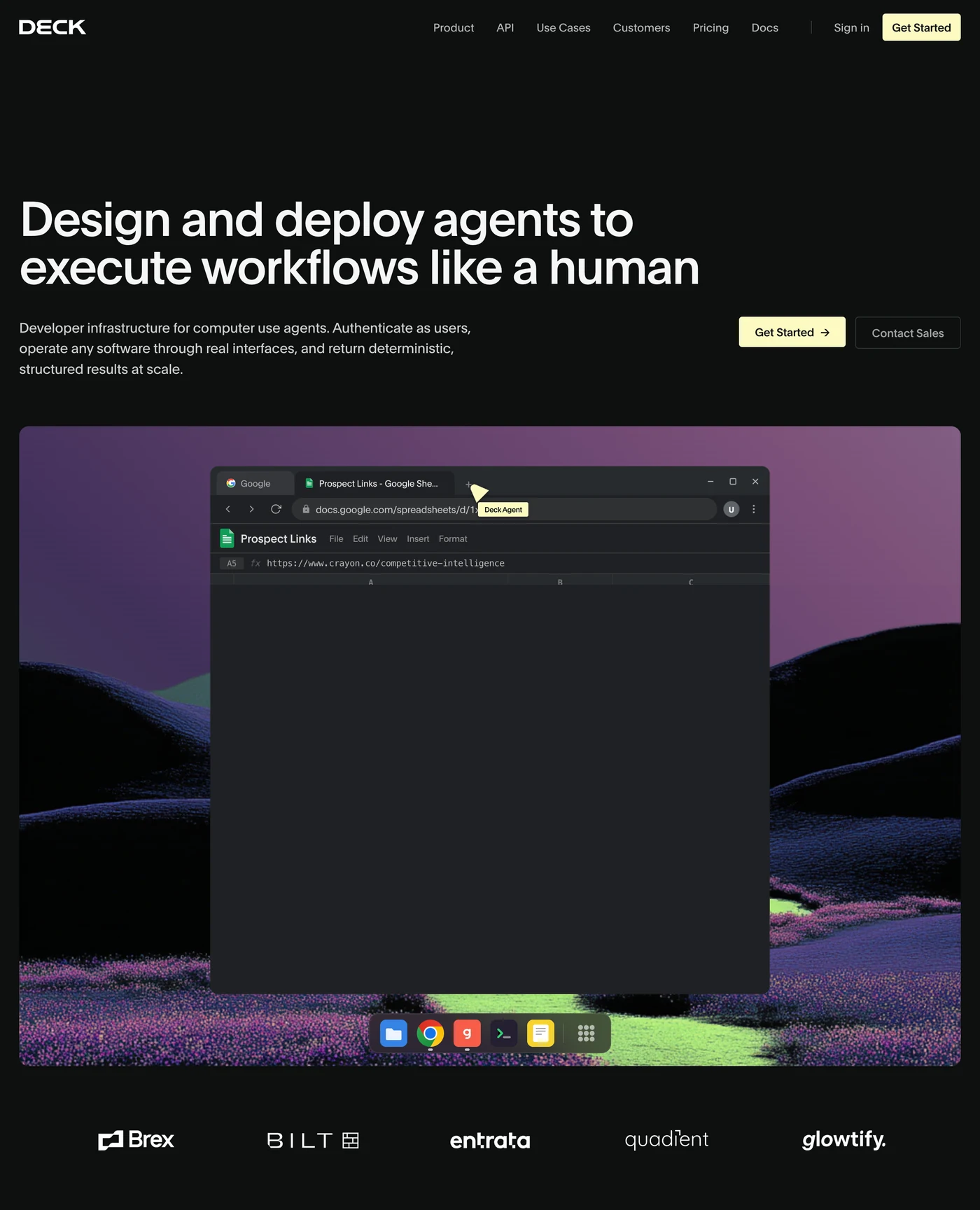
Deck makes the web programmable. Its Computer Use AI agents log into portals, run workflows behind logins, and let product teams ship integrations in one prompt instead of maintaining scrapers, even when there is no API. By early 2026 the product was winning tech-forward customers and the business was growing fast, but almost all of that growth came through word of mouth, investor introductions and outbound. Marketing was the smallest source of new business.
Paid media was the missing engine. Deck had been spending on ads across Google, LinkedIn and other channels, aimed at broad prospecting audiences and generic landing pages, and measured on trial starts. It produced trials, not revenue: in January 2026, a full month of ad spend converted into zero new pipeline.
New customer acquisition is our top challenge. We needed to find our customers where they're looking.
Laurent Léveillée, Marketing Lead, Deck
Our approach
We took over Deck's paid demand generation in March 2026 and rebuilt it around one principle: deals, not leads, are the scoreboard.
- Fix the attribution gap. Leads were landing in HubSpot without attribution because of an issue between the cookie and the HubSpot API. We worked with Deck's developers to implement a fix, restoring revenue-level attribution and sending server-side optimisation signals to the ad platforms.
- Deal-first measurement. Every channel is tracked through HubSpot to pipeline created and deals closed. Weekly numbers, monthly reviews, and channel-level targets replaced MQL counting.
- Channel architecture. Google Performance Max concentrated on the geographies that actually close (US, UK, Canada). Search spend with no attributable opportunities was paused and reallocated into Performance Max and new Meta tests. LinkedIn became the stable bet, structured as a proven-audience campaign with a separate low-budget test lane and strict graduation rules.
- Audience segmentation as the lever. The single biggest efficiency win came from splitting audiences, not adding creative: for example, simply separating Founders from Owners on LinkedIn cut demo CPA by about 43%.
- Creative that speaks to engineers. Meme creative earned engineering attention, and use-case-led angles beat generic messaging: Deck's Migration use case overtook the broad no-API message as the top lead driver.
- A tight weekly loop. A standing weekly call, a shared Slack channel and monthly reviews meant the budget moved within days of a signal, not quarters.
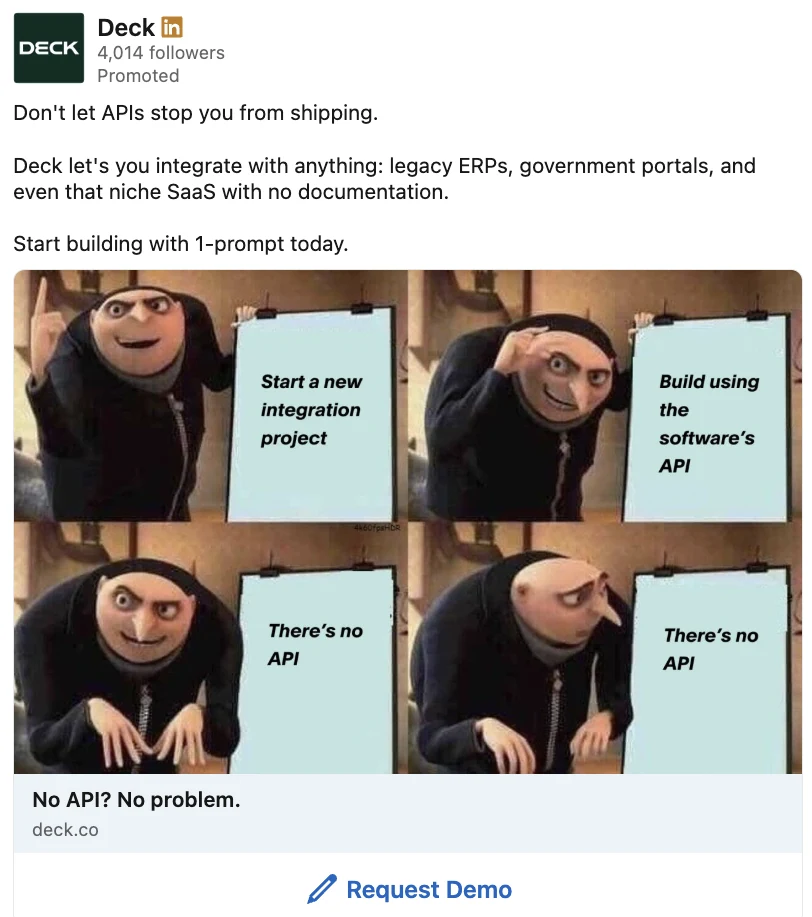
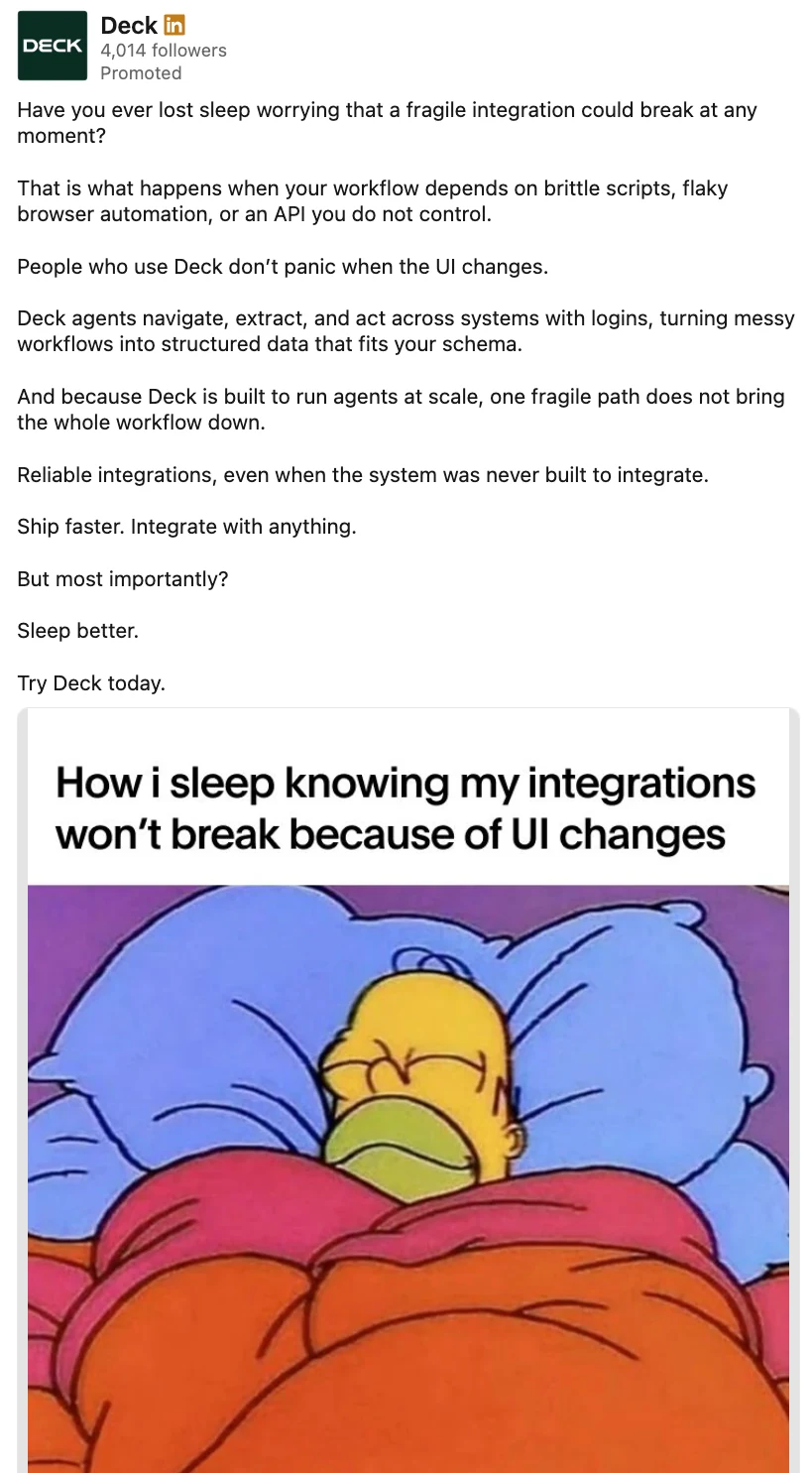
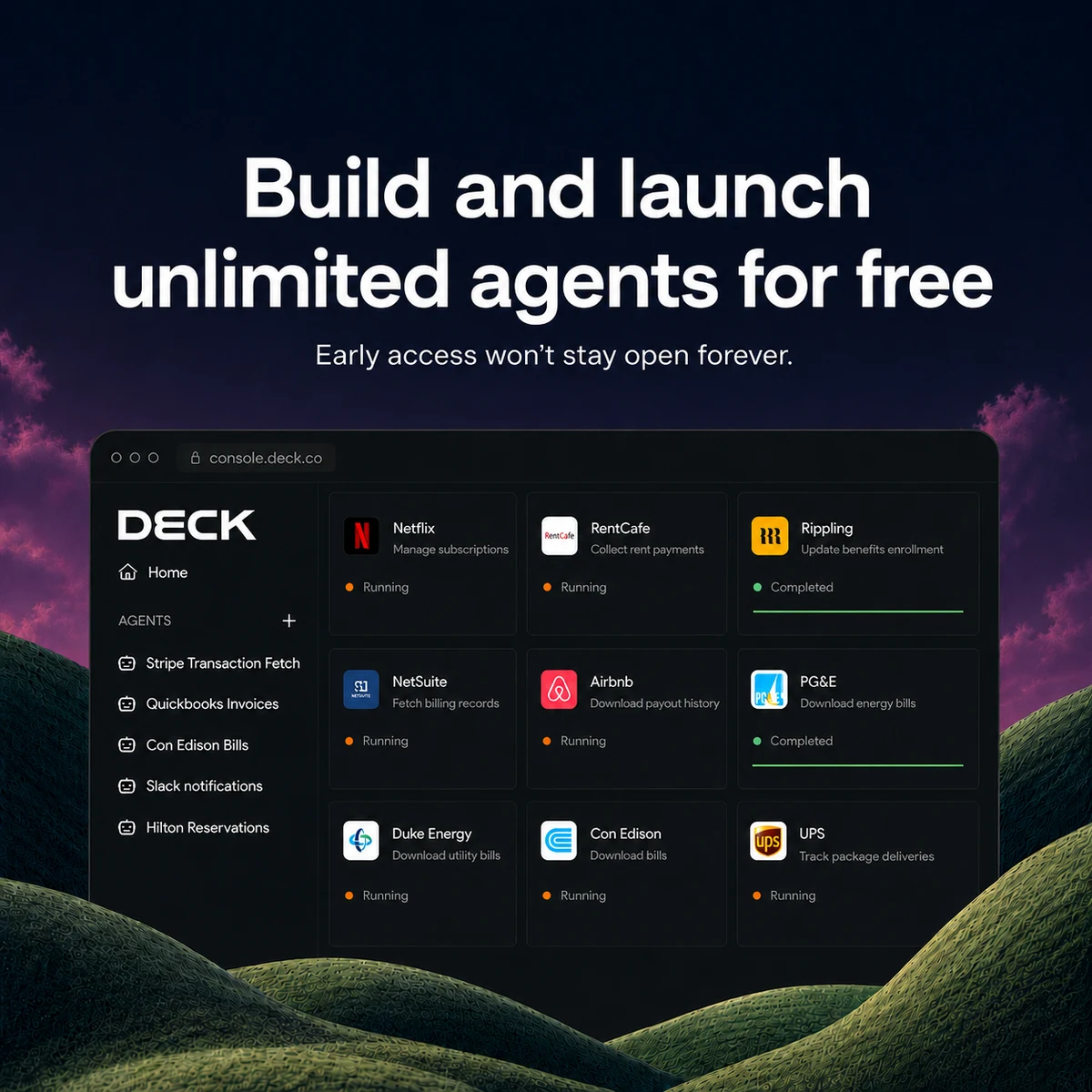
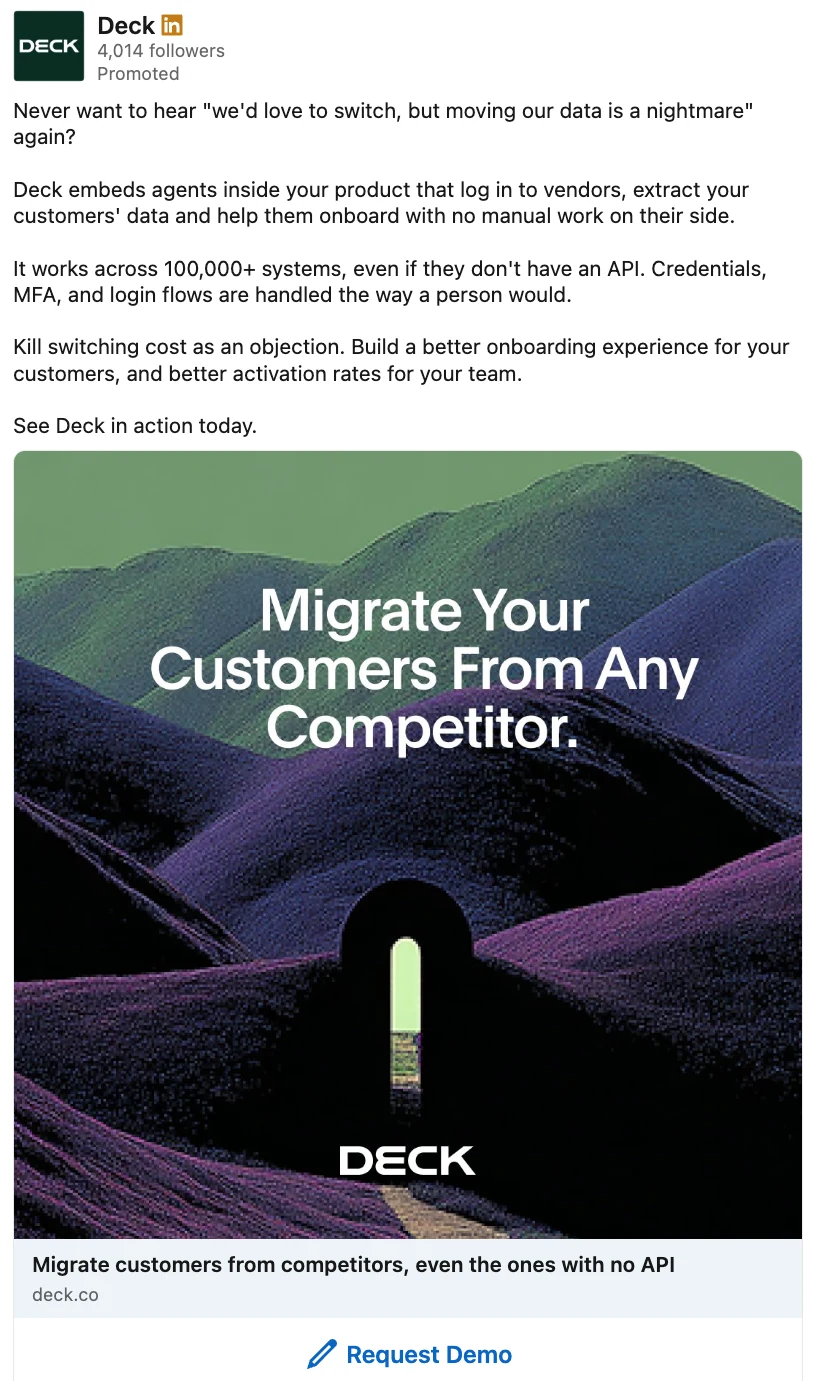
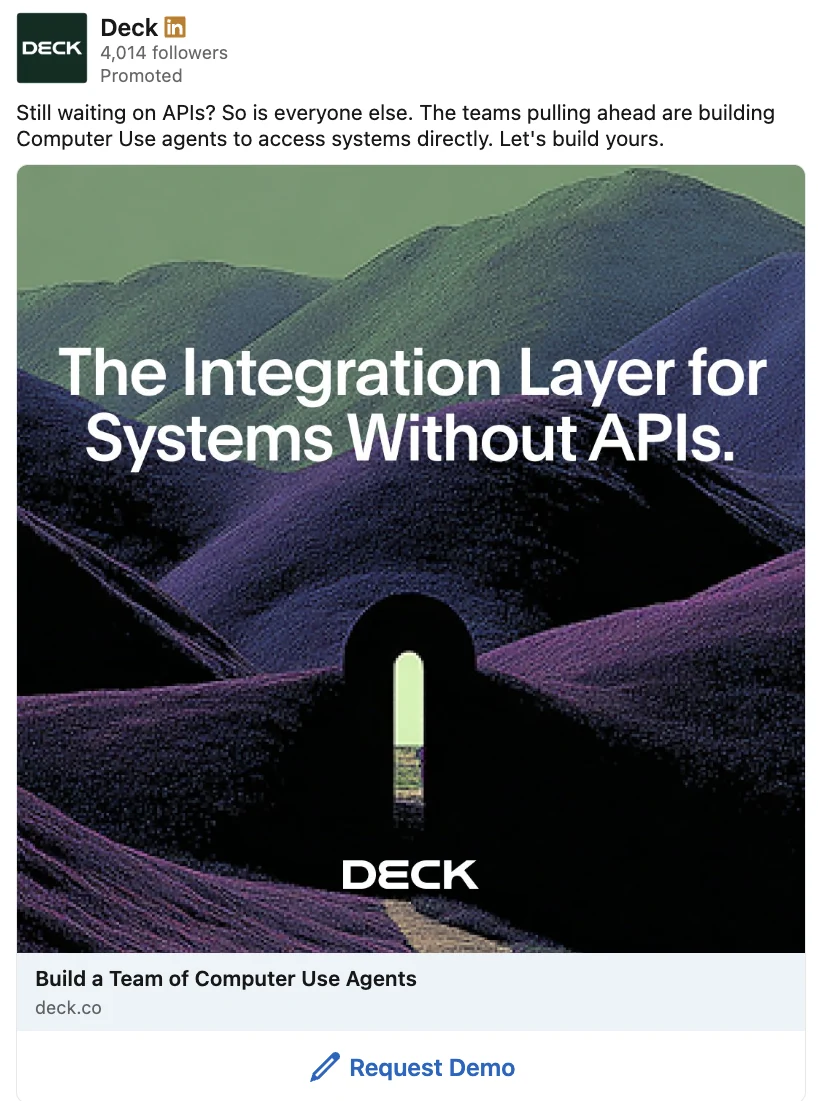
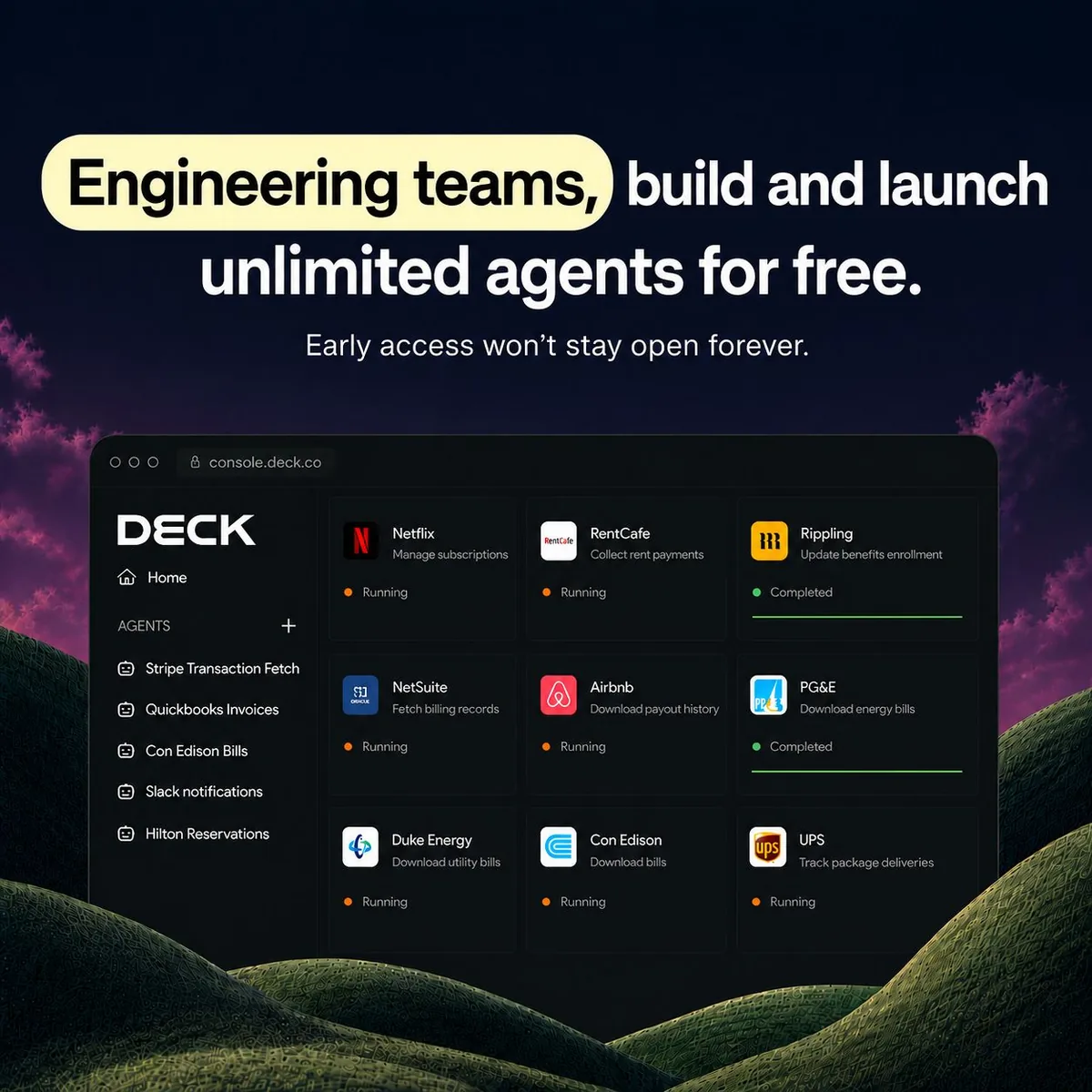
A sample of the creative in market.
I trust you on that, whatever you did this week is working great!
🎉2The impact
Qualified pipeline generated QoQ.
Month-on-month pipeline growth in May.
Growth in monthly trials, January to the peak.
Reduction in demo CPA.
The first quarter was foundation work. Through February to April, paid media closed deals at a steady but modest monthly rate while the account was restructured, and that ceiling became the problem to solve. In May it broke: monthly deals grew 5x on that baseline, with pipeline up 725% month on month. June answered the repeatability question, matching May's deal count with the account's most efficient Google performance yet.
Quarter on quarter, paid media more than doubled the qualified pipeline it generated, as reported in Deck's own monthly reviews. For a product with a long, considered sales cycle, the sharper change is behavioural: paid channels went from a reporting line nobody trusted to the pipeline source the sales team watches daily.
Looks like the updates from LinkedIn yesterday are really killing it, 5 demos yesterday and already 3 meetings booked! You have my greenlight to increase budget on these.
Laurent Léveillée, Marketing Lead, Deck
About Deck
Deck turns the entire web into your API. Its AI agents access authenticated websites and dashboards to connect user-permissioned data from any portal, including the 100,000+ systems with no API, so product teams can define an outcome and ship the integration in one prompt. Deck runs a 99% success rate on complex jobs, has processed over $100M in agentic payments, and is SOC 2 Type II certified and HIPAA ready.
Frequently asked
What does Deck do?
How much does Deck cost?
Is there a free trial?
Who is Deck for?
Want a paid engine like Deck's?
We rebuild paid media around deals, not leads, and prove it in pipeline.
Book a call