



Paid media can create demand as well as capture it. The catch is the cost. Creating demand with ads is the most expensive way to do it, and paid amplifies whatever message you feed it. In year one your message is still a guess, which is why pouring a fresh VC cheque into ads tends to burn cash and teach you almost nothing.
Most early-stage founders reach for paid first because it looks like the fastest route to pipeline. You raise a round, the board wants a growth chart by the next meeting, and paid promises a dial you can turn. Set a budget, pick an audience, watch leads land. The bill comes due a quarter later, when the leads sales chased turn out to be tyre-kickers, the cost per qualified opportunity keeps climbing, and pipeline dies the week you pause spend. What you rented was a trickle with a meter on it, and the meter ran the whole time.
Why do early-stage founders over-invest in paid media?
Because paid feels like a vending machine (money in, leads out), the harder you're pushed to grow, the more that machine tempts you. The mental model is "spend X, get Y". It reads as fast, measurable, and controllable, which is exactly what a founder under board pressure wants.
Two things break the model:
- The first is that the machine amplifies your message rather than improving it, and a young company's message is usually still a guess.
- Second is diminishing returns, which almost nobody prices in at the start. We've watched a founder with a strong seed round put $20k a month into LinkedIn lead gen forms, celebrate the first spike of cheap leads, then spend the next quarter explaining to sales why none of them booked.
The ads did their job and reached the right titles at the right companies. The offer underneath had never been tested on a real buyer, and no amount of targeting fixes that. The dashboard looked healthy. The pipeline didn't move.
This is the junior version of demand generation, and it's expensive to unlearn. Spend-in, leads-out is a tactic wearing a strategy's clothes.
Why does paid media stop converting as you scale?
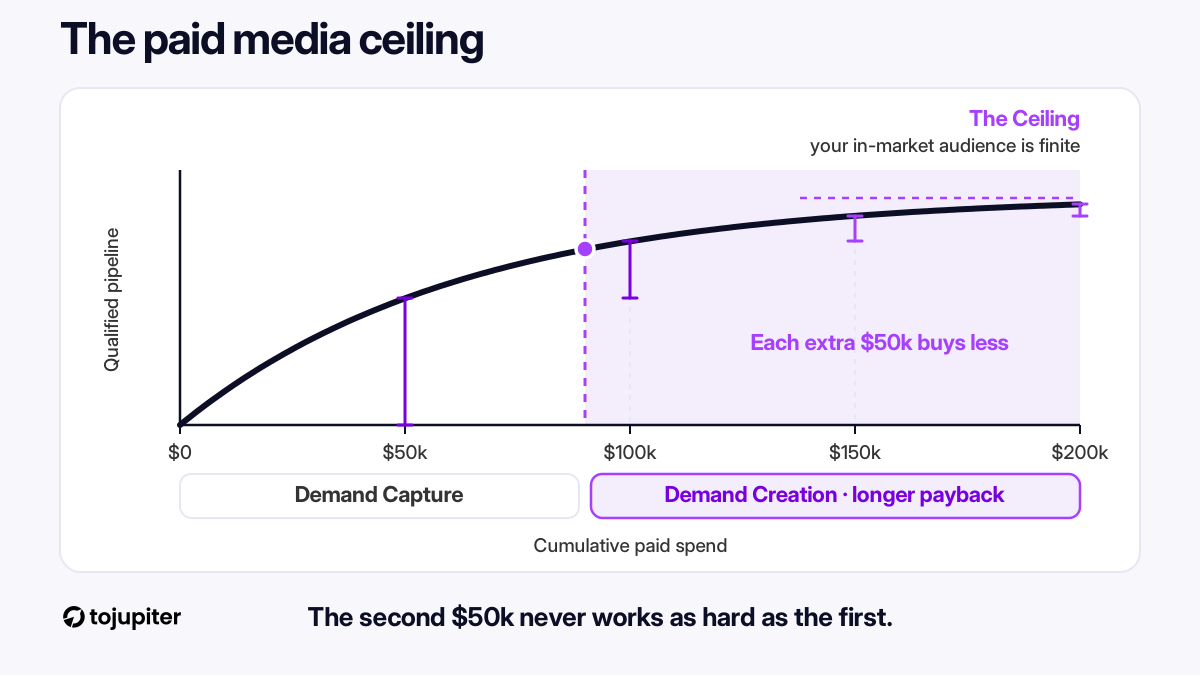
Every paid channel has a ceiling: a point where the next pound of spend reaches a worse audience than the last, and your blended cost per qualified lead rises even while the dashboards stay busy. Call it the paid media ceiling. It exists because your genuine in-market audience is finite, the ad auction gets more expensive as you push past them, and the same creative fatigues the people who've already scrolled past it four times.
For example, the first slice of budget hits the people already looking for you, or for your category, and it converts well. Push past them and you cross into demand creation: paying to put the problem in front of people who haven't felt it yet. That spend can work, and mature companies fund it deliberately, with deep creative rotation and patience for a longer payback.
Cross into it by accident, with capture-era expectations and one tired ad, and the numbers turn on you. In a soft quarter we watched a LinkedIn cost per lead drift past $360 on an account that had been returning leads at a third of that months earlier. Same targeting. Same offer. The in-market pool had thinned, and the spend went looking for pipeline in colder and colder water.
The founders who get burned are the ones who read the early efficiency as a straight line and forecast their Series B pipeline off it. The second $50k never works as hard as the first.
Can paid media create demand, or only capture it?
It can do both. Paid search and retargeting capture demand that already exists, while paid social, video and display create it by putting a message in front of buyers who weren't looking. Category leaders run demand creation at serious scale, and it builds real pipeline.
What creation demands is where early-stage teams come unstuck. Paid amplifies the message you feed it, so a pitch that has never converted anywhere gets broadcast at auction prices, flaws included. Creation also needs a media and content strategy behind it: several angles, fresh creative on rotation, a point of view worth clicking through to, and somewhere useful for the interested-but-not-ready to land. And it pays back slowly, because demand created today becomes pipeline months later, a wait a seed budget struggles to fund.
Compare two spends. Branded search converts cheaply because someone is already typing your name; the click captures demand you earned somewhere else. A cold LinkedIn audience can convert too, but only when the ad carries a message proven on real buyers and there's content behind the click. Run an untested pitch at the same audience and every conversion is a fight against indifference.
That's why sequence beats budget. Get the B2B messaging framework right first, because the message is the raw material paid amplifies. Demand creation through paid is a play you graduate into once cheaper channels have shown you which message catches.
What should you build before you scale paid?
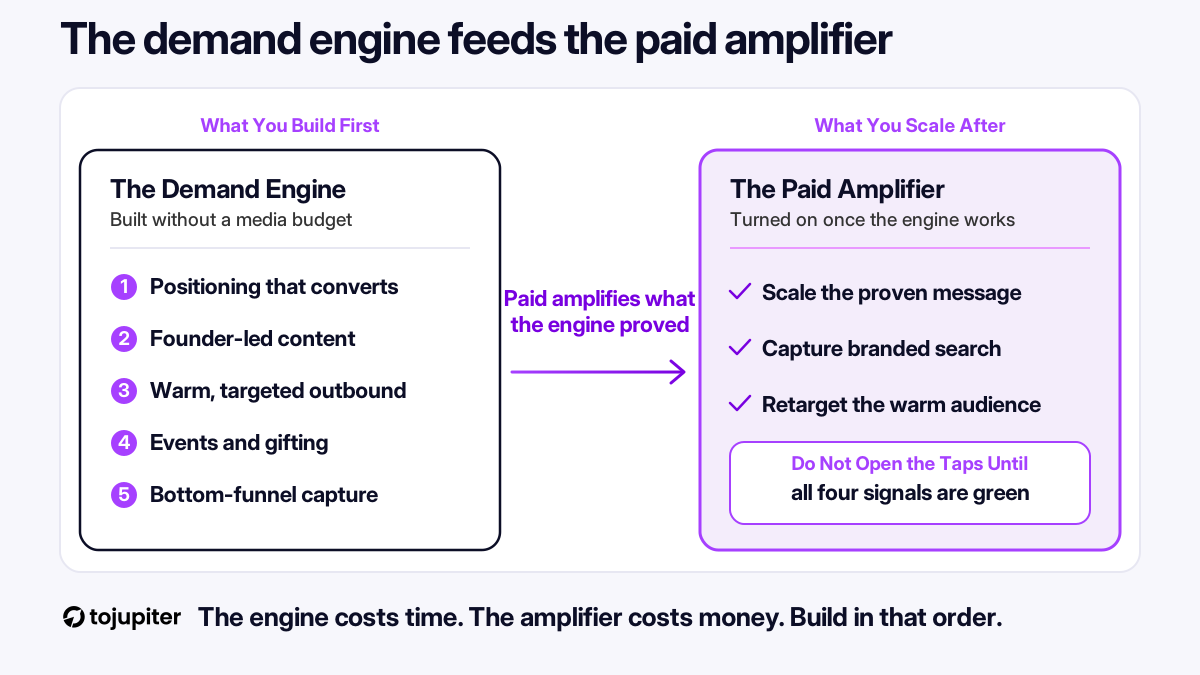
Before paid can amplify anything, you need the demand engine: the owned and manual channels that create and capture demand without a media budget propping them up.
Founders underrate these channels because they look slow next to an ad platform. At this stage they're the most efficient demand creation available, because they cost time instead of auction prices and every send teaches you something an impression can't.
Here are the 5 parts that earn their place:
- Positioning and messaging that converts a cold reader. Run the workshop, rewrite the homepage, and prove the new message on a small outbound or organic sample before a single ad goes live. Our own posts on paid media value propositions for B2B SaaS exist because the offer is what usually breaks, long before the targeting does.
- Founder-led content. One sharp post a week from a founder who knows the buyer beats a content calendar full of hedged, committee-approved nothing. It builds the branded search and inbound that paid will later capture cheaply, and it seeds the media strategy creation will eventually need: the angles that earn engagement organically are the angles worth putting budget behind.
- Warm, targeted outbound. Tools like Instantly and Clay let a solo operator run a considered campaign to a named list. We've booked meetings for clients off tight sends to 250 sector-specific contacts, which tells you the message works long before you pay to broadcast it.
- Events and gifting. When every competitor lives in the same inbox and feed, a sector dinner or a physical gift cuts through in a way another ad impression can't. A £50 gift to reopen a stalled £2,000 sales conversation is some of the best-spent money in the business.
- Bottom-funnel capture. Branded search, a live G2 and Capterra presence, and retargeting. This is the paid you can run on day one, because it captures intent you already earned rather than trying to invent it.
None of this needs a big media budget. All of it hands paid a proven message to amplify when the time comes.
How do you know when you're ready to scale paid media?
You're ready to scale paid when you can point to a repeatable pipeline paid did not create, and a message that converts a cold audience in a small test. We call the check paid readiness, and it has four signals. Wait for all four to go green.
- A repeatable non-paid pipeline. Branded search is climbing, content and events bring inbound, and outbound books meetings on its own. Paid should be accelerating a car that's already moving under its own power.
- A message that converts in a small test. A landing page or lead gen form clears a real benchmark on a modest spend, so you know the pitch works before you scale the reach.
- A retargeting layer that's live. Pool every signal of engagement, form opens, ad clicks, video views, and site visits, into a single bottom-funnel audience. Building exactly this pot for one client became one of the biggest performance gains we made on the account, because it converts warm demand at a fraction of cold cost.
- Unit economics with headroom. Your LTV to CAC has enough room that a rising cost per acquisition, which is coming, doesn't sink the model the moment you push past the easy audience.
Miss on one and you're scaling a leak. Nail all four and paid does what it's genuinely good at.
How much should an early-stage startup spend on paid media, and when?
Early on, cap paid to demand capture: branded search, review-site listings, and retargeting, usually a few thousand a month, because that budget converts intent you already own. It's the cheapest, safest paid you'll ever run. Everything above that waits.
The sequence looks like this. Stage one, capture only, while the demand engine gets built. Stage two, one small creation test, a single audience and offer, to prove a cold message can convert before you commit real money. Stage three, scale toward the ceiling with your eyes on blended CAC rather than channel-level cost per lead. We ran that exact path on a client where roughly $10k of tired Google Search spend was reallocated into fresh Meta and Performance Max tests, and it worked because by then we knew which message converted. Spend followed readiness at every stage.
Judge each stage by one question: is this spend converting demand you earned, or gambling on demand you hoped for?
The three-stage paid budget model
| Stage | What is live | Monthly budget | Signal to advance |
|---|---|---|---|
| One. Capture only | Branded search, review sites, retargeting | A few thousand | Demand engine running and branded search climbing |
| Two. One creation test | Above, plus one cold audience and one offer | Capture plus a contained test | The test beats its benchmark on modest spend |
| Three. Scale to the ceiling | Several audiences, creative on rotation | Whatever blended CAC supports | All four signals green and LTV to CAC has headroom |
The founders who win at paid earned the demand first
Paid media is a brilliant amplifier and an expensive firestarter. Hand it a lit fire and it throws fuel on with real force. Ask it to start the fire and it will, at auction prices, with creative you haven't tested, on a payback timeline your runway has to outlast. The startups that scale paid profitably spent their first two quarters on the unglamorous engine work, the positioning, the founder posts, the outbound, the events, the branded-search capture, so that when they finally opened the taps there was a proven message on the other end worth amplifying.
Build the engine. Then buy the amplifier.


