



Every quarter I audit B2B SaaS ad accounts where the targeting is fine, the budget is fine, the creative is decent, and the results are terrible. The diagnosis is almost always the same: the only thing on offer is a demo.
"Book a demo" asks a stranger to give you 30 to 60 minutes of their time, sit through a pitch, and probably get chased by a sales rep afterwards. That trade only makes sense for the tiny slice of your market that is actively buying right now.
LinkedIn's B2B Institute puts that slice at around 5% of your category at any given time (the 95-5 rule). Everyone else scrolls past, and you pay for the impression anyway.
This article is about what to run instead. Paid media stays in the plan, the offer is what changes.
Why demo CTAs underperform in B2B paid media
A demo CTA is a bottom-of-funnel offer aimed at an audience that is mostly out of market.
You end up paying in-market cost-per-lead prices for out-of-market people, your cost per opportunity balloons, and finance starts asking why paid media "doesn't work." Not to mention, demo requests are an overused CTA by most SaaS companies.
In most of these accounts the channel is fine and the offer is the problem. A channel can only amplify whatever you feed it, and if you feed it "give us your time so we can sell to you," no amount of bid strategy or lookalike modelling saves it.
The fix is to build offers where the prospect wins even if they never buy. The vendor who delivers value first is the one who gets the meeting when the buying window opens. Think of high-value reports and guides, or even limited-time free access to your product.
The Immediate Value Score: a quick way to grade any offer
Before we spend a euro on a client's campaign, we grade the offer with something we call the Immediate Value Score (IVS). Five questions, two points each, ten points total:
| Question | 0 points | 1 point | 2 points |
|---|---|---|---|
| Time to value. How fast does the prospect get something useful? | After a sales cycle | After a call | Within minutes of converting |
| Standalone worth. Is it valuable even if they never buy? | No, it's a pitch | Somewhat | Yes, they'd reference or reuse it |
| Persona fit. Does the format match who they are? | Generic | Right topic, wrong depth | Built for their exact role |
| Effort asked. What do they give up to get it? | 45+ min call plus follow-up | Short form or short call | An email address |
| Reason to act now. Is there genuine urgency? | None | Vague ("limited spots") | Concrete deadline or expiring access |
A cold "Book a demo" typically scores 2 or 3 out of 10. Everything below is a way of dragging that number up. Our working rule: nothing under 7 goes into a cold campaign. Retargeting warm audiences is more forgiving, but cold traffic punishes weak offers brutally.
The IVS doubles as a shared language. When a client insists on a demo CTA, scoring it together turns "we disagree" into "this scores a 3, here's how we get it to an 8."
Demo CTA alternatives: fix the call before you replace it
Sometimes you genuinely need calls on calendars. Fine. Then change what the call is.
Match the call to the persona. If you sell to engineers, security architects or data teams, "talk to sales" is a repellent. "45 minutes with a solutions architect, no salespeople on the call" is a different offer entirely. Technical buyers will happily trade time for technical answers. A discovery script gets you ghosted.
Turn the demo into a workshop. Instead of "see our platform," offer "we'll map your current alert triage workflow live and show you where the hours are leaking." The prospect leaves with a documented artefact about their environment, whether or not they buy. Same 45 minutes, radically different IVS.
Free to start, call to set up. Let people begin for free, then position the call as onboarding help rather than sales. Deck's ad does the first half of this well: "Start for free" plus a screenshot of the actual product doing real jobs. Nobody has to imagine what they're signing up for.
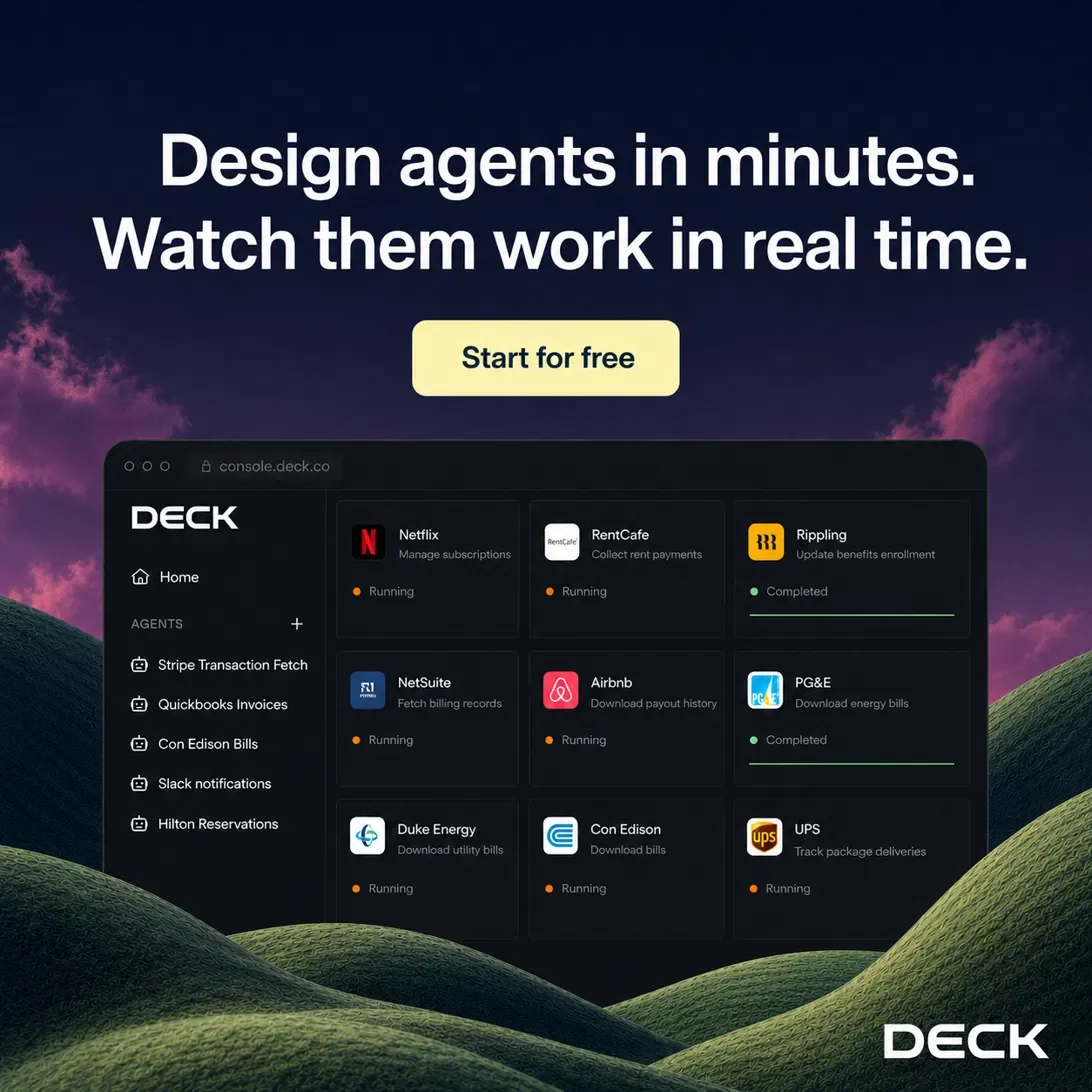
The setup-call variant works because the power dynamic flips. The prospect asked for help with something they already own, which makes it a customer conversation from the first minute.
Gift incentives work (if you position them as compensating time)
Gift cards in B2B ads make some marketers itch. I get it, and I disagree with the itch.
The framing matters. The gift compensates a busy person for time they didn't owe you, and thanks them in advance for what you believe will be a genuinely useful call. Say exactly that in the ad and on the landing page.
Then do the arithmetic. A 30-minute call with a CISO at a Tier 1 target account, secured with a $100 incentive, is one of the cheapest things in your entire GTM motion. Compare it with what it actually costs to crack that account otherwise: months of SDR sequences, ABM display spend, event sponsorships, gifting platforms. The salary hours alone dwarf the gift card. If the incentive collapses six months of pursuit into one booked meeting, it has paid for itself many times over.

Two guardrails. First, lead with the value of the call and keep the incentive in a supporting role. Second, reserve it for high-value personas and accounts where the deal size justifies it. Put a $100 card in front of an $8k-a-year self-serve product and you'll mostly harvest gift card farmers.
Free access, trials and POCs: add a clock
Free trials, free tiers and proof-of-concept programmes are strong offers because the time to value is near zero. They get stronger when you add honest scarcity.
"Free 30-day POC, five slots per quarter, our team runs the implementation" beats an open-ended free trial for one simple reason: an offer with no deadline is an offer people plan to look at later, and later never arrives. Deadlines create decisions. FOMO gets a bad name because it's usually faked; when the constraint is real (your solutions team genuinely can only run five POCs), stating it is just honesty that happens to convert.
Good patterns we've run or seen work:
- Limited-cohort onboarding ("July cohort closes on the 24th, next one is October")
- Expiring sandbox access preloaded with the prospect's own data or industry data
- Free audits or assessments capped per month, with the cap stated in the ad
The common thread is immediate value plus a real reason to act this week.
Top-of-funnel value propositions should be your main priority
Here's the part that runs against most B2B paid media advice: your top-of-funnel offer matters more than your demo offer. It's where nearly all of your addressable audience lives, and it's how conversations start with people who will buy in two, six or eighteen months.
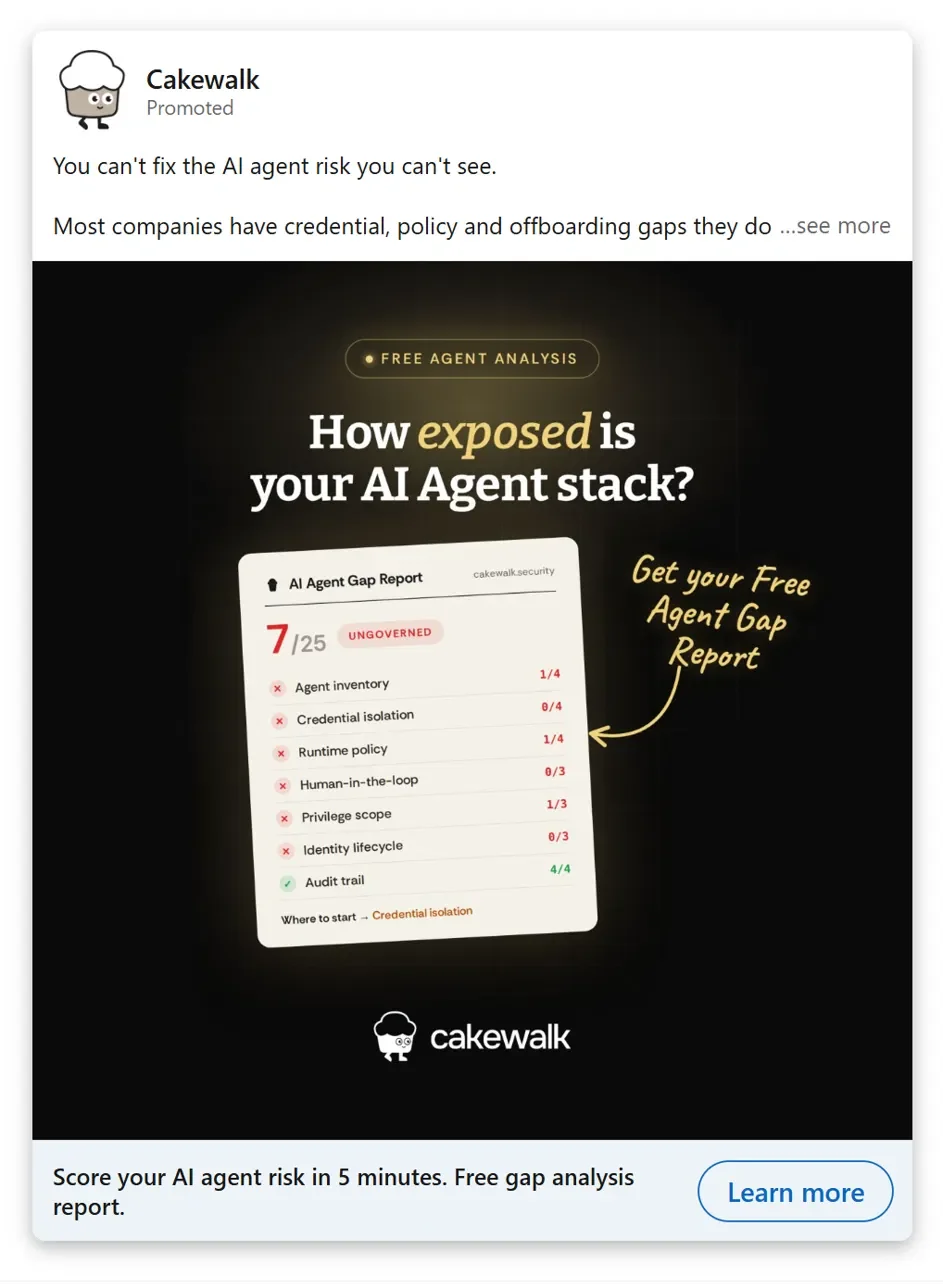
Cakewalk's ad is a clean example. Nobody wakes up wanting a demo of a security product, but "how exposed is your AI agent stack?" with a free five-minute gap report speaks to a fear the persona already has, and the sample report in the creative shows exactly what you'll get.
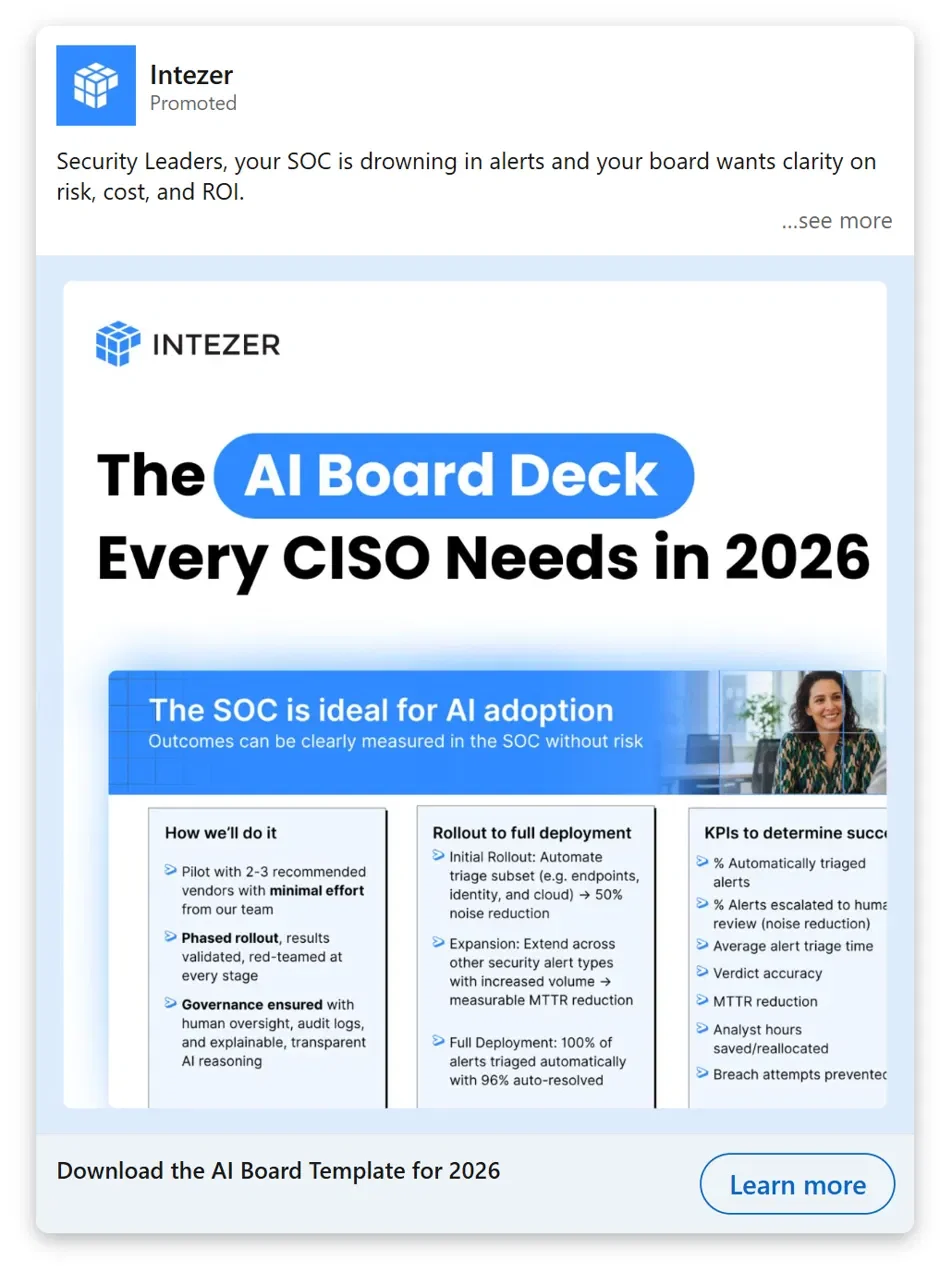
Intezer takes a similar angle for a different persona. "Here's the AI board deck every CISO needs" works because building that deck is a job the CISO already has to do.
Yes, you can gate it (but only with the right follow-up)
Contrary to the loud "never gate anything" crowd, gating top-of-funnel content still works when the friction is genuinely low. LinkedIn's native lead gen forms pre-fill from the member's profile, so the "cost" of converting is two taps. That changes the gating maths completely compared with a seven-field landing page form.
Three conditions, though, or the whole thing falls apart:
- Require work emails. Filter personal domains in the form settings. A Gmail address from a lead gen form is just a name in a spreadsheet.
- Automate the confirmation. The asset should land in their inbox within a minute of the form submit. If your delivery is slow, your first impression is a broken promise.
- Follow up 1:1, fast, from a real human. Within a few hours, someone on your team sends a short personal email, written for that specific lead. Skip the sequence tooling here. Something like: "Saw you grabbed the agent gap report. Out of curiosity, was that prompted by something specific you're working on?" The goal is to understand why they signed up, build a thread, and earn the right to a conversation later. The moment you pitch in that email, you've converted a warm hand-raise into a burned contact.
That third step is where most teams fail, and it's the one that turns a content download into pipeline. The form captures the name. Getting the context takes a human.
Document ads outperform image ads (and one trick to make them stronger)
For top-of-funnel guides and reports on LinkedIn, document ads consistently outperform image ads in our accounts. Letting people swipe through the first pages inside the feed proves the asset is real and worth their email before you ask for it. The preview is the pitch.
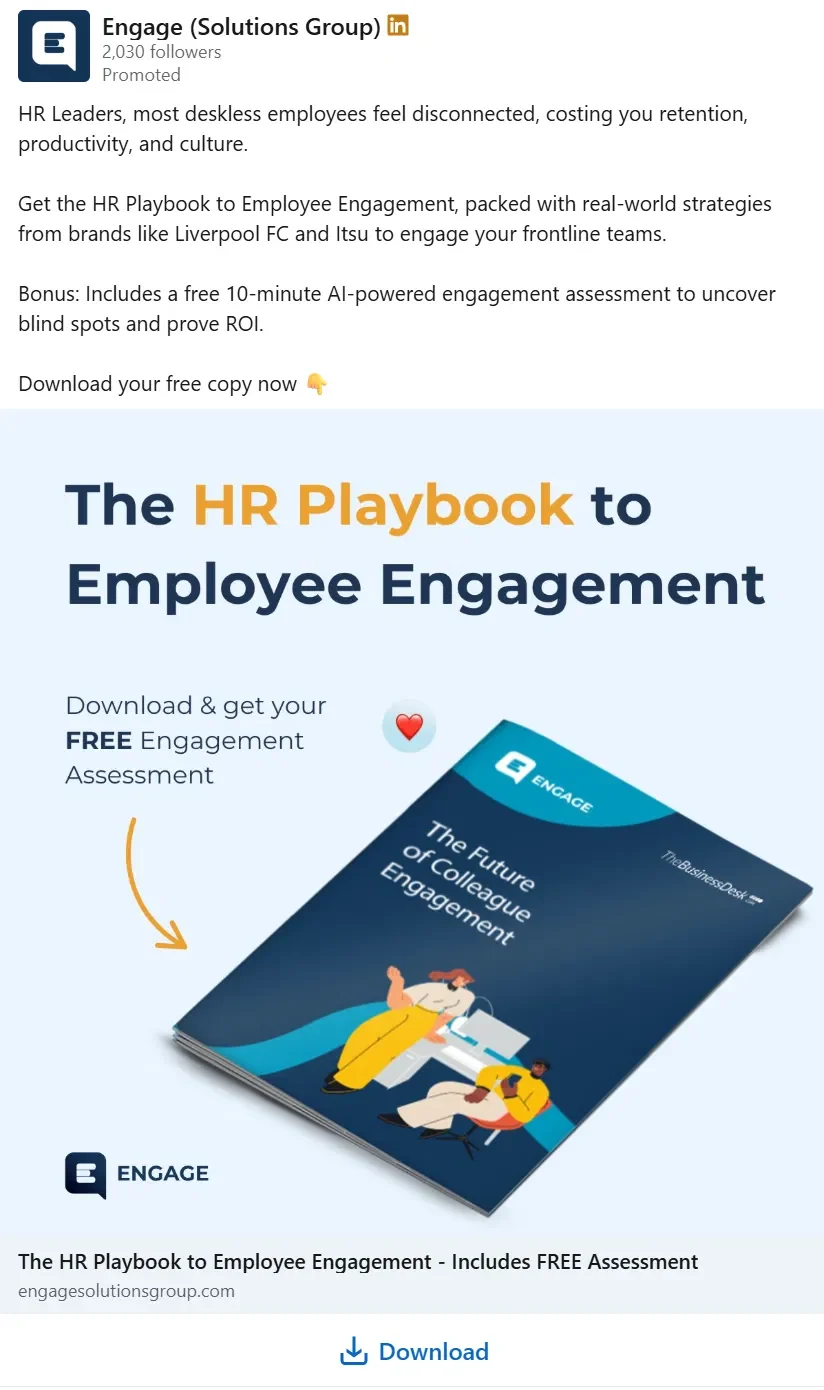
The trick worth stealing from that Engage ad: bundle the document with a second offer. "Download the guide" is fine. "Download the guide and unlock the free assessment tool" is stronger, because now the offer has two kinds of value: something to read and something to use. Other bundles that work: guide plus calculator, report plus benchmark against your own numbers, playbook plus a working session to apply it.
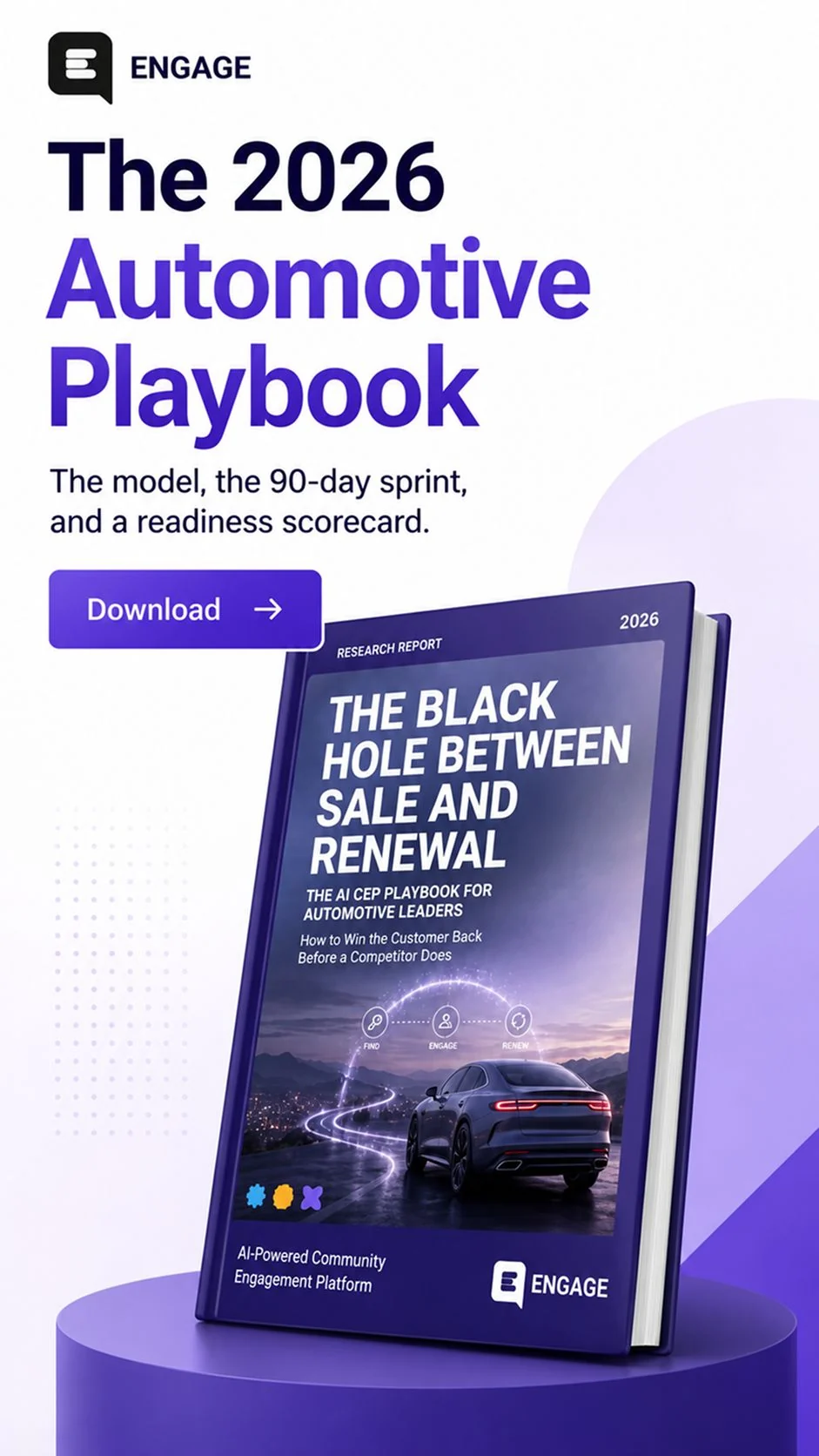
One more note on those creatives: the strongest ones name the persona in the first line ("HR Leaders...", "Security Leaders...") and describe the pain in the prospect's own words before mentioning the asset. The hook earns the swipe, the asset earns the email, and the follow-up earns the meeting. Skip one and the other two stop paying off.
Where this leaves your media plan
If I had to compress this into one instruction: budget-weight your paid media toward offers that score 7+ on the Immediate Value Score, put most of that behind top-of-funnel offers, and treat demo CTAs as a retargeting play for people who already know you. Your cost per meeting drops, and the meetings you do get come from people who've already received something from you. Those are better meetings.


